
Music has a unique power: it can transform a moment, elevate a scene, and etch emotions into memory. Few films demonstrate this better than the 2011 French sensation The Intouchables. Directed by Olivier Nakache and Éric Toledano, the film is a heartwarming tale of friendship, resilience, and the human spirit. Yet, beyond its narrative brilliance, it is the soundtrack that lingers, becoming almost a character in its own right, guiding the audience’s emotional journey. From classical grandeur to contemporary beats, the film’s music does more than complement the story—it deepens it.
A Symphonic Canvas: The Role of Music in Storytelling
At its core, The Intouchables is about the unlikely friendship between Philippe, a wealthy quadriplegic, and Driss, his spirited caretaker. Their worlds collide, and in that collision, music emerges as a bridge. Alexandre Desplat’s score, combined with carefully chosen tracks from various genres, does not simply accompany the scenes—it amplifies the emotional stakes. Desplat, known for his ability to weave subtle yet evocative compositions, crafts a soundtrack that is simultaneously whimsical, poignant, and uplifting.
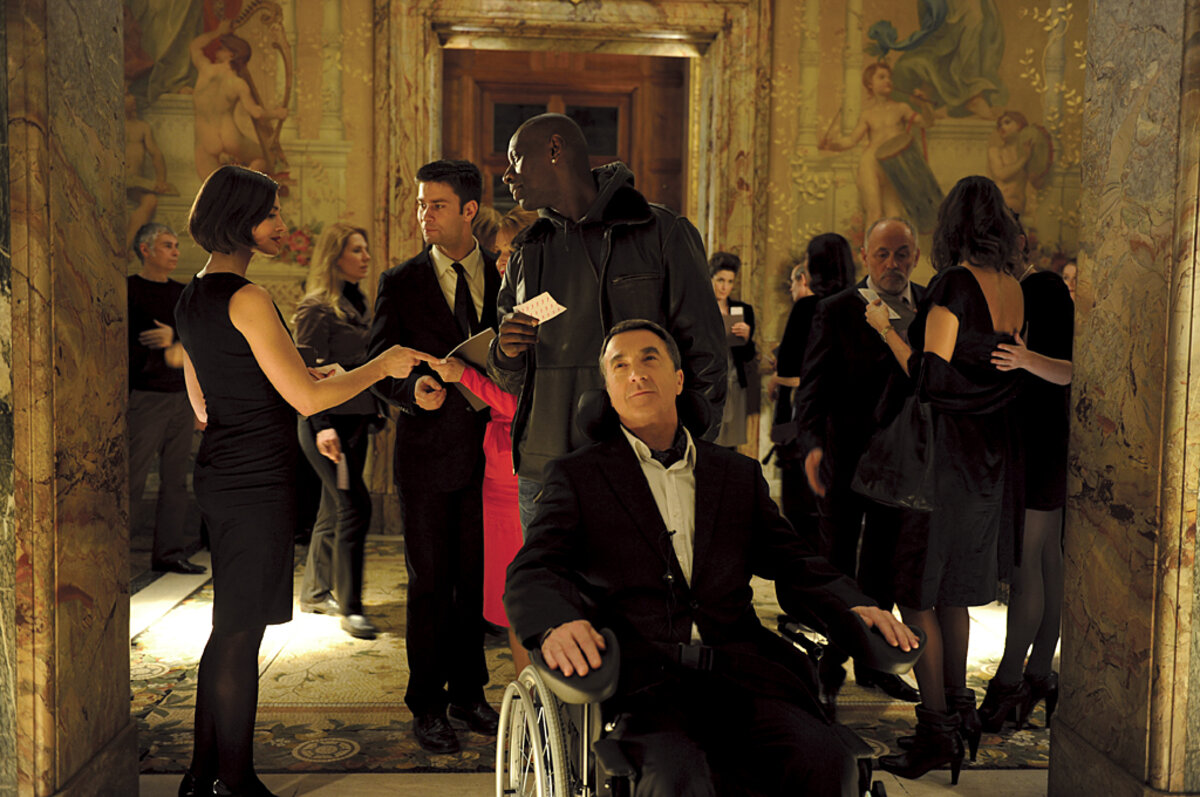
The film’s opening sets the tone. The scene in which Philippe interviews potential caregivers is quiet, formal, and almost sterile, yet the score underlines the subtle humor and tension. Here, music works quietly, gently shaping the audience’s expectations. By the time Driss bursts into Philippe’s life, the transition in the soundtrack mirrors the emotional shift—from rigid structure to spontaneous chaos, from detachment to connection.
The Magic of Contrasts: Classical Meets Contemporary
One of the most striking aspects of The Intouchables soundtrack is its eclectic mix of classical and modern music. This juxtaposition mirrors the film’s central relationship: Philippe, cultured and refined, represents tradition and restraint, while Driss embodies energy, improvisation, and modernity. The music creates a dialogue between these worlds.
Bach’s Cello Suite No. 1 in G Major is one of the most memorable pieces in the film. Its serene, flowing melodies accompany a moment of reflection, emphasizing Philippe’s internal struggles and moments of quiet vulnerability. Yet, in a later scene, the same sense of beauty and precision contrasts sharply with Driss’s entrance, bringing energy and unpredictability into Philippe’s ordered life. The interplay of Bach with contemporary tracks like Earth, Wind & Fire’s September or Ludovico Einaudi’s Una Mattina infuses the narrative with both rhythm and depth, celebrating the collision of differing worlds and sensibilities.
Hip-Hop and Pop: Music as Liberation
Music in The Intouchables is not only about elegance—it is also a vehicle for freedom and joy. One of the film’s most iconic sequences occurs when Philippe and Driss go paragliding over the French countryside. As they soar through the air, the soundtrack bursts into vibrant energy, blending modern beats with cinematic orchestration. The music captures the exhilaration of the moment and the liberation that both characters feel, particularly Philippe, who is physically confined yet emotionally unbound. The audience experiences this sense of release not through dialogue, but through the visceral impact of sound.
Similarly, the use of Earth, Wind & Fire’s September during a playful scene between the two men brings an irresistible sense of joy. The song, with its infectious rhythm and celebratory tone, transforms an ordinary activity into a moment of pure, shared humanity. Music here serves as a bridge not only between characters but also between the audience and the narrative, inviting viewers to feel the uncontainable energy that words alone cannot convey.

Alexandre Desplat’s Emotional Subtlety
While the licensed tracks bring familiarity and cultural texture, Alexandre Desplat’s original compositions are the emotional backbone of the film. Desplat has a unique talent for crafting music that resonates subtly, often conveying more than the dialogue or action can. His score for The Intouchables balances lightness and gravity, reflecting the film’s tonal shifts from comedy to pathos with seamless elegance.
For instance, the gentle piano motifs during reflective moments do not overwhelm the audience but instead offer space to connect with the characters’ emotions. In one pivotal scene, Philippe confronts the limitations of his body and mortality. Desplat’s score swells quietly, almost imperceptibly, allowing the audience to inhabit Philippe’s internal landscape. It is this delicate approach—music that whispers rather than shouts—that contributes to the soundtrack’s lasting impact. By respecting the audience’s emotional intelligence, the music enhances the storytelling in a way that feels organic and authentic.
Music as a Character
In many ways, the soundtrack of The Intouchables functions as a silent character, guiding the audience’s perception and deepening the connection to Philippe and Driss. Just as the men grow and learn from each other, the music evolves with them. Classical pieces highlight introspection and restraint, while contemporary tracks underscore rebellion, joy, and vitality. The interplay between these musical elements mirrors the film’s thematic exploration of friendship across differences.
The soundtrack also supports comedic timing. In scenes of light-hearted mischief, such as Driss’ unconventional handling of Philippe’s social life, the music punctuates the humor with precision. It moves effortlessly from subtle underscore to playful, rhythmic emphasis, enhancing the comedic effect without overshadowing the performances. The audience laughs, yes, but also feels a deeper emotional connection, a rare balance that many films fail to achieve.
Cultural Resonance Through Music
Beyond individual emotions, the music in The Intouchables resonates on a cultural level. The film’s soundtrack bridges genres and eras, reflecting not only the diversity within the story but also the universality of music as a human experience. From French classical compositions to American funk and modern piano pieces, the film celebrates a shared emotional language that transcends borders. This universality is part of why the soundtrack continues to linger in viewers’ minds long after the film ends.
Moreover, the strategic use of music in social contexts—the parties, outings, and personal moments—adds authenticity to the characters’ worlds. When Driss introduces Philippe to modern music, it is not merely a soundtrack choice; it is a cultural exchange, a sonic metaphor for the breaking down of societal and personal barriers.
Lasting Impact on the Audience
Why does the music of The Intouchables leave such a lasting impression? Partly because it is emotionally intelligent, responding to the nuances of the story with precision. Partly because it is eclectically curated, weaving together classical elegance and contemporary energy. But above all, it resonates because it embodies the film’s heart: the triumph of connection, joy, and resilience over adversity.
Audiences remember not just the characters or the humor but the way the film made them feel. When the final notes play, whether it is the gentle swell of Desplat’s piano or the upbeat rhythm of a funk classic, viewers carry those emotions beyond the theater. The soundtrack has succeeded in what all great film music strives for: it has become inseparable from the story itself, enhancing memory, emotion, and meaning.
![Intouchables-007.jpg [avif-to-jpg output image]](https://s8.ezgif.com/tmp/ezgif-862e5752a4f71e11.jpg)
Conclusion: The Enduring Power of Sound
The Intouchables demonstrates that music in film is far more than decoration; it is a conduit for emotional truth. Through Alexandre Desplat’s subtle compositions, the strategic inclusion of classical masterpieces, and the exhilarating burst of contemporary tracks, the soundtrack achieves a rare synergy. It guides the audience, mirrors character development, underscores humor, and amplifies joy and sorrow. Most importantly, it resonates long after the credits roll, reminding us that the right music, at the right moment, can touch the soul in ways words alone cannot.
In the end, the soundtrack of The Intouchables is a testament to the power of emotional resonance through sound. It is a celebration of life, friendship, and the beauty of human connection, captured not only in images and dialogue but in the very notes that accompany them. This is why, for many, the film’s music does more than accompany a story—it becomes an indelible part of the story itself, leaving an enduring imprint on the hearts of its audience.