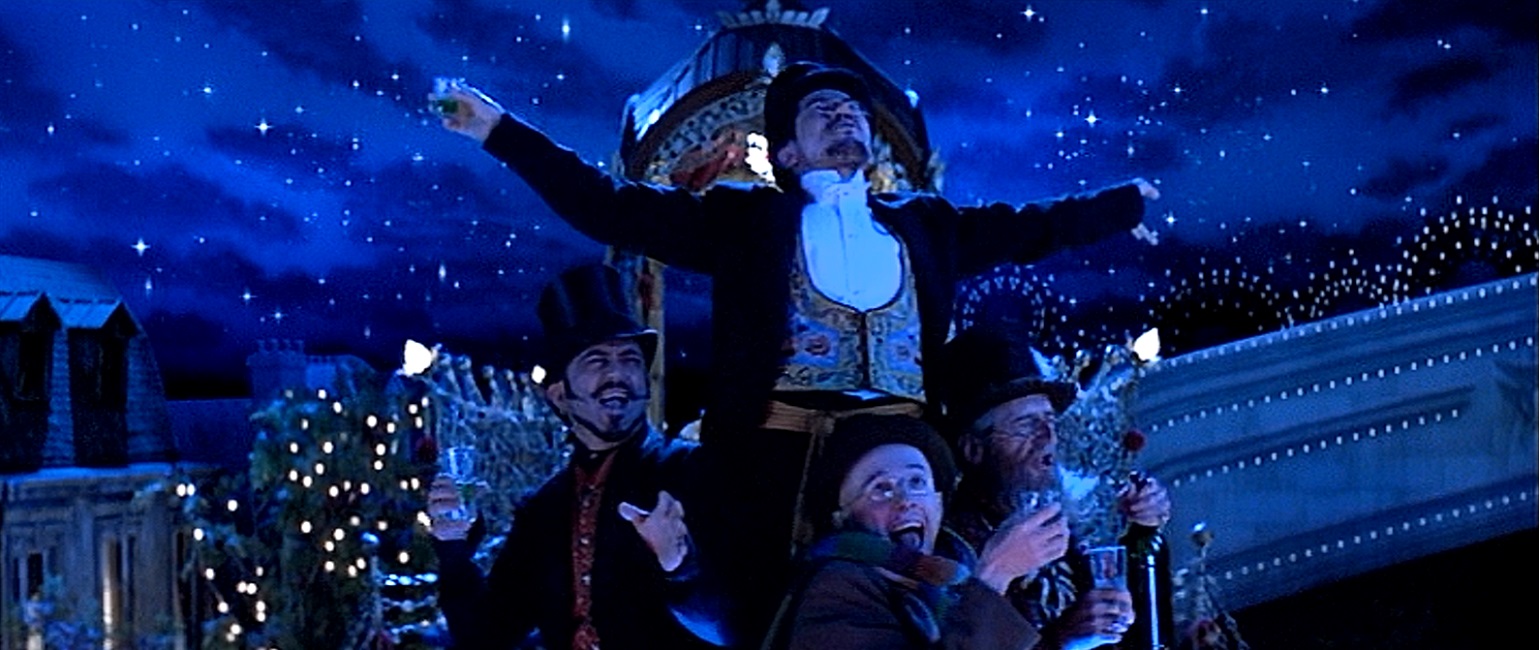
When Moulin Rouge! premiered in 2001, it did more than just dazzle audiences with its visual spectacle; it reshaped how music could function in cinema. Baz Luhrmann, already known for his bold, kinetic storytelling in films like Romeo + Juliet, took the musical genre and injected it with a frenetic, emotional energy that was impossible to ignore. Yet while the film’s sumptuous costumes, elaborate set design, and dizzying cinematography captured attention, it was the soundtrack that gave Moulin Rouge! its lasting emotional resonance. Every song, whether a reimagined pop hit or a tender ballad, became a vessel for the story’s heart, making the audience not just viewers, but participants in the emotional journey of its characters.
:max_bytes(150000):strip_icc()/MSDMORO_EC001-dcbf351ecaa646c8bc94a7d087ebce25.jpg)
Reimagining Pop for the Stage of Cinema
One of the most striking aspects of the Moulin Rouge! soundtrack is its audacious use of contemporary pop music within a period setting. The film is set in Paris at the turn of the 20th century, yet it features songs like Christina Aguilera, Lil’ Kim, Mýa, and Pink’s explosive rendition of “Lady Marmalade.” At first glance, the choice might seem jarring—a neon-punk anthem in a velvet-draped cabaret—but Luhrmann’s genius lies in his ability to align these songs with the emotional beats of the narrative. “Lady Marmalade” doesn’t just exist for shock or spectacle; it introduces us to the Moulin Rouge itself, a world of daring freedom and tantalizing chaos. The music instantly communicates the energy of the setting, making the audience feel the electric pulse of the cabaret.
Similarly, Elton John’s “Your Song,” performed with delicate vulnerability by Ewan McGregor’s Christian, bridges the temporal gap between contemporary audiences and the period setting. In this intimate moment, Christian’s love for Satine is communicated not through dialogue, but through melody. The song transforms from a simple pop ballad into a profound declaration of affection, showcasing how Moulin Rouge! uses familiar music to forge emotional immediacy. The audience doesn’t just hear Christian’s words—they feel them, because the song carries universal emotional truths.
The Power of Mashups and Musical Juxtaposition
Perhaps the most innovative element of the soundtrack is its daring use of mashups. Rather than relying solely on original compositions, the film layers multiple songs together to create complex emotional textures. The “Elephant Love Medley” is a masterclass in this technique, blending parts of classic love songs like “All You Need Is Love,” “I Will Always Love You,” and “One More Night” into a seamless narrative duet between Christian and Satine. Each snippet of song serves a precise narrative purpose: confession, seduction, vulnerability, and devotion intertwine in a musical conversation that transcends spoken dialogue.
This approach amplifies emotional resonance because it mirrors the chaos of real-life emotion. Love is rarely linear, and the soundtrack reflects that reality. By weaving together seemingly disparate melodies, Moulin Rouge! captures the whirlwind intensity of Christian and Satine’s romance. Every rise and fall in the music mirrors the highs and lows of their relationship, drawing the audience into an experience that is both exhilarating and heart-wrenching.
Music as Character Development
In Moulin Rouge!, music doesn’t just enhance scenes—it defines character arcs. Satine, the star courtesan of the cabaret, is introduced through the bold, sultry energy of “Diamonds Are a Girl’s Best Friend,” a playful nod to cinematic history that simultaneously situates her as both a performer and a woman with desires beyond her role. As the story unfolds, the soundtrack adapts to her inner transformation. When Satine confesses her vulnerability to Christian, the music softens, often featuring piano or string arrangements that foreground emotional subtlety over spectacle. This musical evolution mirrors her character development, allowing the audience to track her emotional journey as clearly as her narrative one.
Christian’s arc is equally entwined with the music. His transformation from a naïve writer to a man passionately immersed in love and risk is punctuated by the soundtrack. Songs like “Come What May,” the film’s original ballad, serve as thematic anchors for his devotion to Satine. Every time the melody reappears, it reminds the audience of the stakes, creating continuity and deepening the emotional impact of each scene.
![1695-the-cast-of-the-north-american-tour-of-moulin-rouge-the-musical-photo-by-matthew-murphy-for-murphymade-scaled.jpg [webp-to-jpg output image]](https://s2.ezgif.com/tmp/ezgif-2374ef1fe77ed1b0.jpg)
The Emotional Gravity of Original Compositions
While the mashups and pop covers draw attention, the original compositions in the soundtrack are what truly anchor the film emotionally. “Come What May” stands as the emotional spine of the story, a song written specifically for Moulin Rouge! that encapsulates love in its purest, most transcendent form. Unlike the pop adaptations, this song is unmoored from preexisting associations, allowing the audience to fully inhabit the characters’ emotions without external references. Its soaring melody and poignant lyrics elevate critical scenes, such as the lovers’ declarations of commitment amidst overwhelming odds. The music here is inseparable from the narrative, creating a resonance that lingers long after the credits roll.
Other original arrangements, like the orchestral interludes that accompany Satine’s declining health, underscore the story’s tragic dimension. In these moments, the music does not compete with visuals or dialogue—it magnifies them, adding layers of pathos that the audience instinctively feels. By using both familiar pop music and original compositions strategically, the soundtrack achieves a rare duality: it is both accessible and profoundly moving.
The Role of Rhythm and Editing
Another layer to the soundtrack’s emotional power is its integration with the film’s frenetic editing style. Luhrmann’s signature rapid cuts, whip pans, and visual splashes of color are complemented by a soundtrack that matches them rhythmically. Scenes like the “Sparkling Diamonds” number showcase the precision of this synergy, where music, choreography, and camera movement converge to create a sensory overload that exhilarates the viewer. The music sets the pace of emotion, dictating when hearts race, when tension peaks, and when intimacy slows. In Moulin Rouge!, the soundtrack is not an accessory—it is the heartbeat of the film.
This meticulous synchronization between audio and visual elements enhances emotional resonance because it mimics how humans experience heightened moments in real life. In love, excitement, or grief, emotions often arrive in waves, sometimes disjointed or overlapping. The film’s editing, paired with the carefully curated soundtrack, replicates this psychological reality, making the audience’s emotional engagement instinctive rather than manufactured.
Cultural Impact and Timelessness
The Moulin Rouge! soundtrack has transcended the film itself, influencing both cinematic and musical landscapes. Its daring mashups and recontextualized pop songs opened the door for a new era of musical filmmaking, inspiring later productions to experiment with genre and temporal boundaries. Songs like “Lady Marmalade” achieved mainstream chart success, but their significance in the film is far deeper: they are emotional signposts, markers of character identity, and conduits for narrative momentum. The soundtrack’s cultural resonance endures because it speaks to universal experiences of love, desire, and tragedy through music that is both familiar and innovative.
Moreover, the emotional depth of the soundtrack has made it a favorite in personal playlists and live performance adaptations. Fans revisit it not just for nostalgia, but because the music continues to evoke the complex spectrum of human emotion. This timelessness underscores how Moulin Rouge! achieved something rare: a musical film whose songs are not confined to the screen but live in the hearts of its audience, extending its emotional impact far beyond its original release.
![alamy_film-moulin-rouge-2-1024x680.jpg [webp-to-jpg output image]](https://s2.ezgif.com/tmp/ezgif-2388830edcb8bdcd.jpg)
Conclusion: Music as the Soul of Moulin Rouge!
At its core, Moulin Rouge! is a story about love, loss, and the transformative power of art. The soundtrack is not simply an accompaniment; it is the emotional engine that drives the narrative forward. By combining daring pop covers, original compositions, and intricate mashups, Baz Luhrmann created a musical landscape that mirrors the complexity of human emotion. Songs like “Come What May,” “Elephant Love Medley,” and “Your Song” do more than entertain—they invite the audience into the intimate, chaotic, and ecstatic world of Christian and Satine.
The genius of the Moulin Rouge! soundtrack lies in its ability to fuse spectacle with sincerity, to make the extravagant deeply personal. It teaches us that music in film is not just about sound—it is about emotional resonance. It is about creating moments that linger, melodies that echo in memory, and a storytelling experience that feels as alive as the hearts it depicts. Nearly a quarter-century later, the soundtrack of Moulin Rouge! remains a masterclass in cinematic music, proving that when music and story align perfectly, the result is unforgettable.