When Disney’s Beauty and the Beast premiered in 1991, it didn’t just introduce audiences to a visually enchanting story—it redefined the role of music in animated storytelling. The film’s songs are not merely ornamental; they serve as vehicles of emotion, giving depth to characters, advancing the plot, and making the narrative resonate on a profoundly human level. Alan Menken’s compositions, paired with Howard Ashman’s poignant lyrics, transform ordinary scenes into unforgettable emotional experiences, cementing Beauty and the Beast as a masterpiece of musical cinema.
Music as a Character-Defining Tool
One of the most remarkable aspects of the film’s music is its ability to reveal character psychology. From the opening notes of “Belle” to the haunting tones of the title song, music provides insight into the internal worlds of the characters in ways dialogue alone could never achieve. Belle’s introductory song, for instance, paints her as an intelligent, independent young woman trapped in the confines of provincial life. Menken’s melody, bright yet tinged with longing, mirrors Belle’s curiosity and sense of isolation. Ashman’s lyrics—clever, narrative-driven, and infused with wit—allow audiences to experience Belle’s inner thoughts in a way that is both intimate and universal. Through the combination of melody and words, Belle becomes more than a character; she becomes someone whose emotional truth resonates immediately.
Similarly, the Beast’s musical identity evolves with his character arc. His initial appearances are accompanied by darker, more ominous motifs, reflecting his anger, loneliness, and the curse that isolates him. When the Beast sings, his deep, resonant voice carries both menace and vulnerability, showcasing Menken’s genius in blending orchestral tones with emotional subtext. As the narrative progresses, the musical textures surrounding the Beast soften, becoming more lyrical and harmonious. This evolution is more than a change in musical style; it mirrors the Beast’s gradual emotional opening and capacity for love, allowing audiences to feel the transformation as intensely as they witness it on screen.
The Role of Duets in Emotional Storytelling
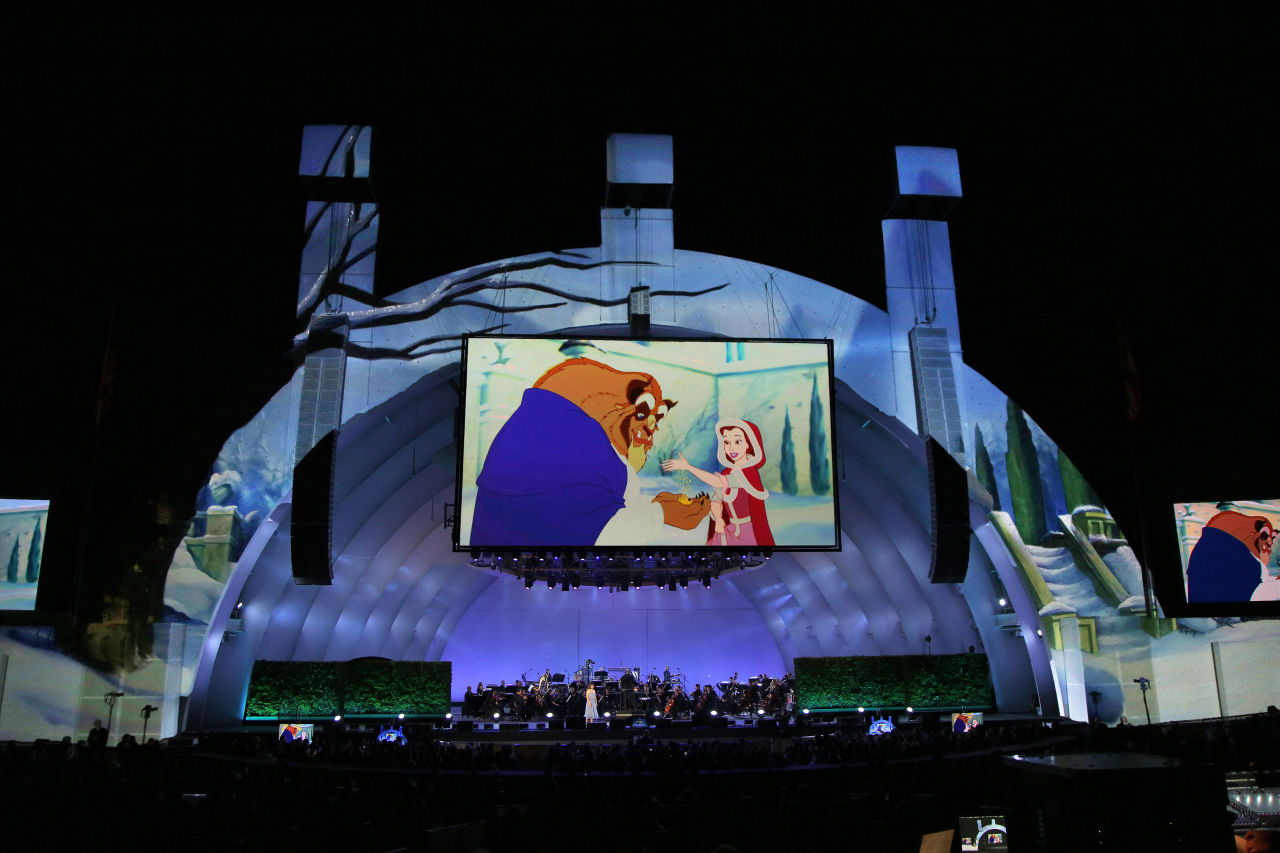
The iconic title track, “Beauty and the Beast,” performed as a duet between Belle and the Beast, exemplifies how music can externalize internal conflict and desire. In this sequence, the ballroom glows with warmth, and Menken’s orchestration swells in tandem with the characters’ emotional crescendo. Every rising note, every tender pause in the melody, reflects the characters’ tentative steps toward connection. Ashman’s lyrics subtly convey mutual vulnerability and growing affection, emphasizing that music here is not just accompaniment—it is the emotional language through which the characters communicate what words cannot fully capture.
The duet also serves as a pivotal narrative device. It signals the turning point in the relationship between Belle and the Beast, transforming their dynamic from fear and mistrust to understanding and intimacy. The audience is not just witnessing a dance; they are participating in the characters’ emotional awakening. The music bridges the gap between the characters’ inner experiences and the viewer’s empathy, a testament to the power of song in shaping narrative perception.
Musical Motifs and Emotional Continuity
Beyond individual songs, Beauty and the Beast employs recurring musical motifs to reinforce emotional continuity and thematic depth. Menken’s orchestration is careful to weave these motifs throughout the film, creating a musical thread that binds disparate scenes together. For example, subtle echoes of the “Belle” melody appear in quieter, reflective moments, reminding the audience of her ideals and perspective even when she is not on screen. Similarly, fragments of the Beast’s themes reappear during moments of vulnerability, ensuring that his emotional journey is consistently foregrounded.
These motifs do more than reinforce character; they also enhance narrative cohesion. By revisiting familiar musical phrases in new contexts, the audience experiences a sense of growth and transformation alongside the characters. This technique creates an emotional resonance that dialogue or action alone might struggle to achieve, proving that music in Beauty and the Beast is not ancillary—it is narrative architecture.
The Orchestration of Emotion
The orchestration itself is a masterclass in emotional nuance. Menken uses a wide range of instruments to evoke specific feelings and moods. Strings often underscore moments of romantic tension or melancholy, while brass and percussion provide grandeur and urgency during action sequences. Even subtle instrumental choices, such as the use of woodwinds during reflective or introspective moments, enhance the emotional texture of the story.
One particularly striking example occurs in the song “Be Our Guest.” While ostensibly a lively, comedic number, the orchestration cleverly balances exuberance with a sense of wonder. The interplay between bold brass, nimble strings, and playful percussion not only entertains but also subtly conveys the enchanted, magical nature of the castle itself. Music in this scene transforms inanimate objects into characters with their own personalities, demonstrating how orchestration can amplify narrative immersion.

Lyrics as Emotional Amplifiers
Howard Ashman’s lyrics in Beauty and the Beast are equally critical to the film’s emotional impact. His words carry wit, depth, and empathy, ensuring that each song serves a narrative purpose beyond melody. In “Gaston,” the lyrics reveal the titular character’s narcissism and social dominance, while the jaunty, triumphant music underscores the town’s complicity in elevating him. This combination creates a multi-layered emotional response: the audience is amused, wary, and forewarned all at once.
By contrast, in “Something There,” the lyrics and music intertwine to convey subtle emotional shifts. The song captures the characters’ tentative recognition of mutual affection, with Menken’s gentle harmonic progressions echoing the uncertainty and excitement of new feelings. Ashman’s words are deliberately understated, allowing the music to carry much of the emotional weight. This interplay between lyrics and composition illustrates how the film achieves emotional subtlety without sacrificing narrative clarity.
The Cultural Resonance of Musical Storytelling
The emotional power of Beauty and the Beast’s music extends beyond the immediate narrative. The songs have become cultural touchstones, resonating with audiences of all ages and backgrounds. The film’s music embodies timeless themes—love, transformation, courage, and empathy—making it both universally relatable and deeply personal. Through music, viewers experience the characters’ journeys in a visceral, emotionally authentic way, forging connections that endure long after the credits roll.
Moreover, the soundtrack’s success paved the way for Disney’s Broadway adaptation, where the music was expanded and further explored. The stage versions of Menken’s compositions allowed for richer orchestrations and extended character development, demonstrating how the emotional potency of these songs transcends medium. The music’s ability to convey emotion and narrative remains its most enduring legacy, highlighting the symbiotic relationship between composition and storytelling.
Music as a Lens into Emotional Truth
Ultimately, the power of song in Beauty and the Beast lies in its ability to reveal emotional truth. Music gives characters a voice beyond dialogue, allowing audiences to witness their fears, desires, and transformations with unparalleled intimacy. The compositions act as a lens, focusing attention on moments of vulnerability and revelation. The interplay of melody, orchestration, and lyricism creates an emotional texture that words alone cannot achieve, making the film a triumph of narrative musicality.
In addition, the emotional clarity provided by the music allows the story’s themes to resonate with subtlety and depth. Love is not portrayed as instantaneous or superficial; it is gradual, layered, and complex, just as the musical compositions themselves unfold gradually, revealing hidden layers with each listening. This fidelity to emotional truth is a hallmark of Menken and Ashman’s collaboration, demonstrating the extraordinary potential of music to elevate animated storytelling to art.
Conclusion
Beauty and the Beast stands as a pinnacle of animated musical storytelling, in no small part because of its masterful use of song to enhance character and narrative. Alan Menken’s compositions and Howard Ashman’s lyrics work in tandem to reveal character psychology, advance the plot, and evoke deep emotional resonance. Through duets, motifs, orchestration, and lyrical precision, the music transforms the film from a simple fairy tale into a rich, emotionally immersive experience.
Every note, every lyric, every orchestral flourish is deliberately crafted to communicate something profound about the characters’ journeys and the universal truths they embody. The result is a cinematic experience in which music is not simply an accompaniment but a driving force of emotional storytelling, ensuring that Beauty and the Beast remains a timeless masterpiece of both animation and musical composition.
The film’s music continues to inspire, moving audiences and artists alike, proving that when story and song are harmoniously intertwined, the result is nothing short of magical. Beauty and the Beast teaches us that music is more than background—it is the emotional heartbeat of narrative, capable of shaping hearts and minds with every note.