
Ennio Morricone’s name is synonymous with cinematic genius. For over six decades, he transformed the way audiences experience movies, infusing films with music that was not just accompaniment, but an essential narrative force. His work in blockbuster cinema stands as a testament to the power of music in shaping emotion, tension, and memory, proving that a film’s soundtrack is as crucial as its visuals. From spaghetti westerns to Hollywood epics, Morricone’s music elevated storytelling, leaving an indelible mark on generations of filmmakers and moviegoers.
His career, remarkably prolific and diverse, spanned more than 500 film and television scores, each imbued with a unique voice. What set Morricone apart was his ability to craft music that was instantly memorable yet profoundly complex, capturing moods and emotions that words alone could never convey. In every project, he treated music as an integral narrative component, ensuring that each note, silence, or sound effect contributed to the storytelling in a meaningful way.

Redefining the Western Soundscape
Morricone first captured the world’s attention through his collaboration with director Sergio Leone, particularly in the “Dollars Trilogy,” which includes A Fistful of Dollars, For a Few Dollars More, and The Good, the Bad and the Ugly. These films were considered spaghetti westerns, a genre often dismissed by critics at the time. Yet, Morricone’s music transformed them into timeless masterpieces. He did not simply compose background music; he created soundscapes that conveyed character, tension, and narrative pacing.
In The Good, the Bad and the Ugly, the now-iconic main theme is far more than a melody. The haunting whistle, the sparse guitar, and the rising orchestral layers mimic the vast, unforgiving landscapes and the tense standoffs between characters. Morricone’s genius lay in his ability to translate cinematic tension into sonic form. The music became a character in itself, shaping the way viewers perceived the story. The score’s unconventional instruments, like the Jew’s harp and human voices used as percussive or melodic elements, were groundbreaking at the time. This approach was revolutionary; it taught Hollywood and international filmmakers that a score could carry narrative weight equal to dialogue or cinematography.
Crafting Emotional Universes
While many composers focus on supporting the visuals, Morricone built entire emotional universes within his scores. Films like Once Upon a Time in the West exemplify this approach. The sweeping themes of love, vengeance, and tragedy are embedded in every note, creating a musical tapestry that guides the audience through the characters’ inner lives. The opening scene, a near-silent depiction of waiting and anticipation, is brought to life entirely by the score. The music dictates the rhythm, the suspense, and even the character dynamics, demonstrating how Morricone redefined the role of music in storytelling.
Even in moments of extreme silence or minimal dialogue, Morricone’s compositions communicated volumes. His music carried the unspoken emotions, the psychological tension, and the narrative subtext. In blockbuster cinema, where spectacle often dominates, Morricone’s work reminds us that music is the soul of the cinematic experience. His scores often functioned as an emotional compass, steering audiences through complex plots, moral dilemmas, and dramatic reveals. He had a unique ability to evoke nostalgia, heartbreak, or exhilaration through subtle variations in instrumentation, harmony, or tempo.
Blending Genres and Breaking Conventions
Morricone was not confined to traditional orchestral scoring. He experimented boldly, blending classical, avant-garde, and popular musical elements to create unforgettable soundscapes. In The Mission, he combined indigenous instruments, choral arrangements, and lush orchestration to craft a score that felt both epic and intimate. The cascading melodies of “Gabriel’s Oboe” transcend the film itself, becoming a piece of music that stands alone as an emotional masterpiece. This ability to merge genres allowed Morricone to create scores that were innovative yet deeply resonant, a combination that made him indispensable to blockbuster filmmaking.
His unconventional approach extended to sound effects within the music itself. He often incorporated non-traditional sounds—gunshots, whip cracks, human voices—as part of the composition. In the westerns, these elements blurred the line between score and sound design, immersing viewers more fully in the cinematic world. By doing so, Morricone revolutionized how composers approached film scoring, showing that music could be a living, breathing part of the narrative rather than a background element. In doing so, he challenged audiences to experience film in a multidimensional way, where sound and image merged to tell a cohesive story.

Collaboration with Hollywood Legends
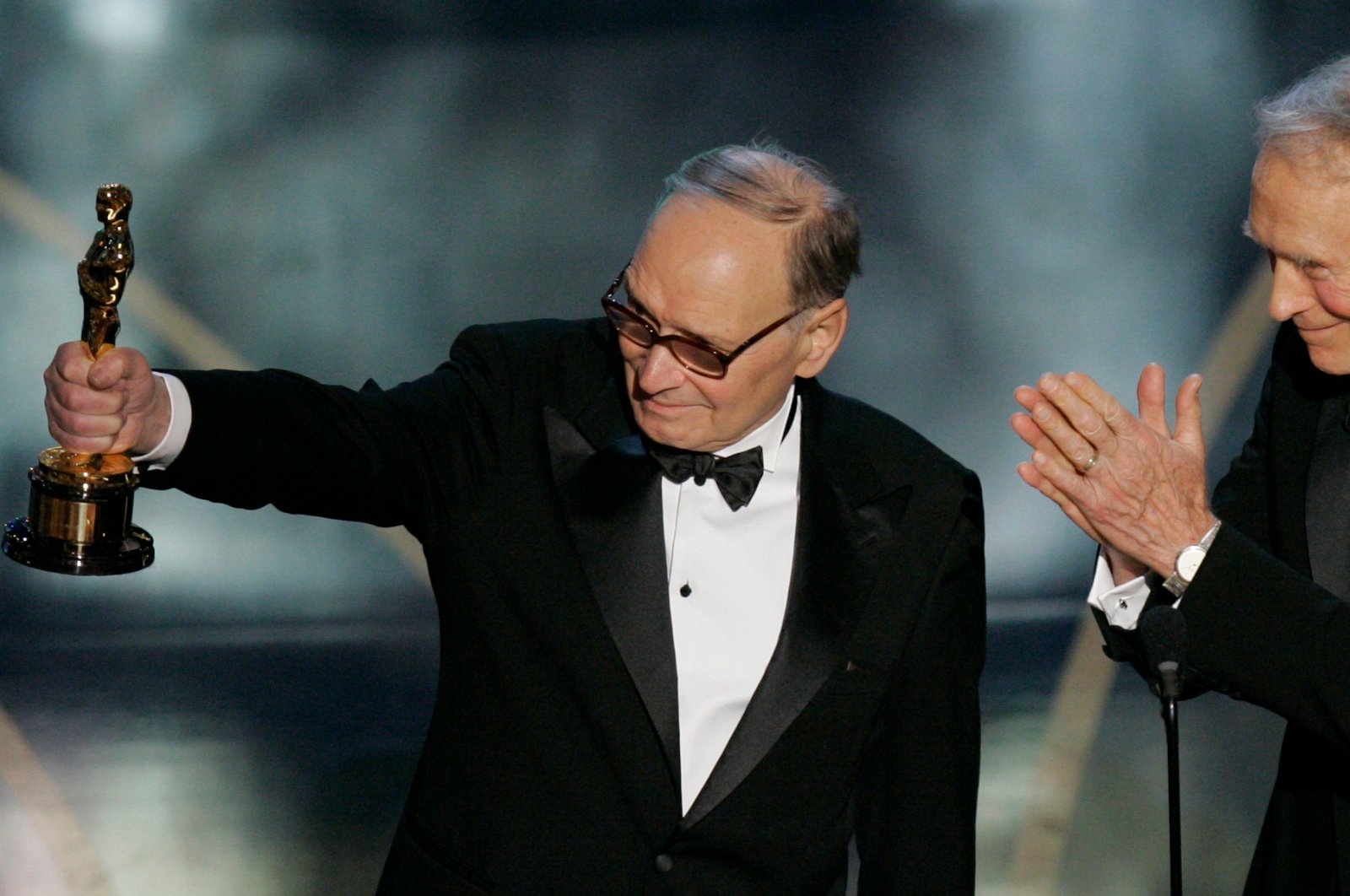
Morricone’s transition to Hollywood further cemented his legacy. He worked with directors like Quentin Tarantino, Brian De Palma, and Giuseppe Tornatore, bringing his signature style to large-scale productions. In The Hateful Eight, directed by Tarantino, Morricone crafted a score that won him his first Academy Award for Best Original Score. Here, he demonstrated his mastery of tension and suspense, using dissonant strings, ominous percussion, and haunting motifs to intensify the claustrophobic atmosphere of the film. The music became a character in itself, a constant presence that heightened every confrontation and revelation.
Similarly, in Cinema Paradiso, Morricone’s score captures nostalgia, love, and the bittersweet passage of time. His music amplifies the emotional stakes, transforming a story about childhood, cinema, and memory into an unforgettable cinematic experience. Hollywood recognized that Morricone’s music did not just accompany a film; it elevated it, making even familiar stories feel profound and unique. His collaboration with Bernardo Bertolucci in 1900 and Brian De Palma in The Untouchables further showcased his versatility, as he adapted his style to suit historical epics, intense dramas, and crime thrillers alike.
Music as Narrative Architecture
One of Morricone’s most revolutionary contributions to blockbuster cinema was his ability to structure music as narrative architecture. In traditional film scoring, music often reacts to the visuals, emphasizing dramatic peaks or emotional beats. Morricone, however, frequently composed music that anticipated the story, shaping the audience’s perception before the visuals even unfolded. In The Untouchables, for instance, the score guides viewers through tension and moral conflict, with crescendos and silences carefully orchestrated to mirror the characters’ psychological landscapes. The music informs the narrative, influencing how audiences interpret every scene.
This approach has influenced countless contemporary composers and blockbuster films. Directors now understand that a score is not mere embellishment—it is a storytelling tool capable of shaping pacing, suspense, and emotional resonance. Morricone’s method demonstrates that the most effective scores are those that exist in dialogue with the narrative, rather than simply supporting it. Even blockbuster franchises today, such as Star Wars, The Lord of the Rings, or The Marvel Cinematic Universe, owe a debt to Morricone’s principle that music should guide the story and connect audiences to the characters on a deeper level.
Universal Appeal and Timeless Influence
What sets Morricone apart from many film composers is his universal appeal. His music transcends language, culture, and cinematic genre. Whether it’s a spaghetti western, a romantic drama, or an action-packed thriller, Morricone’s compositions resonate deeply with audiences worldwide. The main theme from The Good, the Bad and the Ugly, for instance, is instantly recognizable even to those who have never seen the film. Its emotional power is immediate and visceral, a testament to Morricone’s ability to tap into the human experience through sound.
Moreover, his influence continues to shape modern blockbuster cinema. Directors frequently cite him as a source of inspiration, and his scores are studied in music schools around the world. Morricone taught filmmakers and composers alike that music is not just an accessory, but a defining element of cinematic storytelling. In today’s blockbuster films, from epic superhero franchises to high-stakes thrillers, echoes of his techniques can be felt in the way music drives tension, emotion, and audience engagement.
The Maestro’s Subtle Genius
Morricone’s brilliance was not just in grand gestures or bombastic scores—it was in the subtlety of his musical decisions. He understood that sometimes the quietest notes carry the most weight. In films like La Leggenda del Pianista sull’Oceano (The Legend of 1900), he uses delicate piano lines to convey solitude, longing, and introspection, proving that emotional resonance is not always loud or dramatic. This sensitivity to the nuances of human emotion allowed his music to resonate deeply across cultural and generational boundaries.
His compositions also often displayed a cinematic foresight, where melodies foreshadowed events, motifs suggested hidden character motivations, and harmonies hinted at emotional undercurrents that the audience might not consciously recognize. This layered complexity ensured that every viewing of a Morricone-scored film revealed new dimensions of the story, making his work endlessly rich and rewarding.
Legacy of the Maestro
Ennio Morricone’s impact on blockbuster cinema is immeasurable. He redefined what film music could be, transforming it from background accompaniment to an active narrative force. His scores are meticulously crafted emotional journeys, guiding audiences through landscapes of suspense, love, nostalgia, and human complexity. From his revolutionary westerns to his Hollywood epics, Morricone demonstrated that music could shape the very soul of a film.
The essence of Morricone’s genius lies in his ability to fuse technical precision with emotional resonance. He understood that the right note, at the right moment, could evoke memories, provoke tears, or ignite adrenaline. His compositions remain as relevant and powerful today as they were decades ago, inspiring filmmakers, musicians, and audiences alike.